Magnesium and Brain Health in Stressful Times
Under prolonged psychological distress, the adrenal glands excrete magnesium at rapid rates, creating a vicious cycle of neuro-excitotoxicity. Discover how magnesium regulates NMDA receptors and GABA pathways to restore mental clarity.

Neurobiologist & Integrative Psychiatrist, Frankfurt

- Magnesium acts as the natural physiological plug for NMDA glutamate receptors in the central nervous system, preventing calcium over-excitation.
- During acute or chronic stress, cortisol triggers renal wasting of magnesium, accelerating emotional burnout and brain fog.
- Magnesium directly facilitates the binding of GABA to neuro-receptors, turning down hyperactive nervous system activity.
- Targeted supplementation restores neuroplasticity and brain-derived neurotrophic factor (BDNF) levels within 6 to 8 weeks.
The NMDA Receptor: Why Magnesium Is Nature’s Brake Pedal
In the human brain, glutamate is the primary excitatory neurotransmitter responsible for alertness, computation, and memory consolidation. Glutamate acts on NMDA receptors, opening ion channels that allow calcium to flow into neurons.
Under normal conditions, an ion of magnesium sits inside the NMDA channel pore, functioning as an electrical plug. Without sufficient intracellular magnesium, the channel remains permanently ajar, flooding neurons with toxic amounts of calcium. This leads to neuro-excitotoxicity—experienced as racing thoughts, severe brain fog, irritability, and insomnia.
Psychological stress triggers adrenaline and cortisol release, which signals the kidneys to dump magnesium into the urine. Lower magnesium increases vulnerability to stress, sparking even higher cortisol production.
GABA Synthesis & HPA Axis Modulation
Beyond its role at NMDA channels, magnesium is an indispensable cofactor for glutamic acid decarboxylase, the enzyme that converts excitatory glutamate into calming gamma-aminobutyric acid (GABA).
Simultaneously, magnesium acts at the pituitary gland to diminish adrenocorticotropic hormone (ACTH) responsiveness. By calming the hypothalamic-pituitary-adrenal (HPA) axis, it shields brain tissues from chronic cortisol-induced microglial inflammation.
Optimizing Delivery: Which Chelates Reach the Brain?
While Magnesium Bisglycinate significantly lowers peripheral muscular tension and supports sleep architecture, Magnesium L-Threonate was developed at MIT specifically to penetrate the blood-brain barrier. Studies indicate that L-Threonate can elevate cerebrospinal fluid magnesium concentrations by up to 15%, directly enhancing synaptic density in the hippocampus and prefrontal cortex.
Neurochemical Action of Magnesium Under Stress
| Neurological Pathway | Depleted Magnesium State | Optimized Magnesium State |
|---|---|---|
| NMDA Glutamate Receptors | Permanently open; toxic calcium influx | Protected by ionic magnesium plug; calm neurons |
| GABA Receptor Affinity | Blunted; constant hyper-vigilance | High affinity; deep cognitive relaxation |
| HPA Cortisol Output | Exaggerated and prolonged stress curves | Normal circadian drop; healthy morning peak |
| Hippocampal BDNF | Suppressed; memory lapses and brain fog | Stimulated; elevated neuroplasticity & learning |
200 mg – 400 mg elemental magnesium (Bisglycinate or L-Threonate) alongside 100 mg L-Theanine.
Split dose: half in the late afternoon to blunt post-workday cortisol spikes, half 30 minutes before sleep.
Synergizes with Ashwagandha (Withania somnifera), Apigenin, and high-purity Omega-3 fatty acids.
Start with 200mg and increase gradually over 10 days to assess digestive comfort.
Frequently Asked Questions
Scientific inquiries answered by our Munich pharmacy and phytomedicine panel.
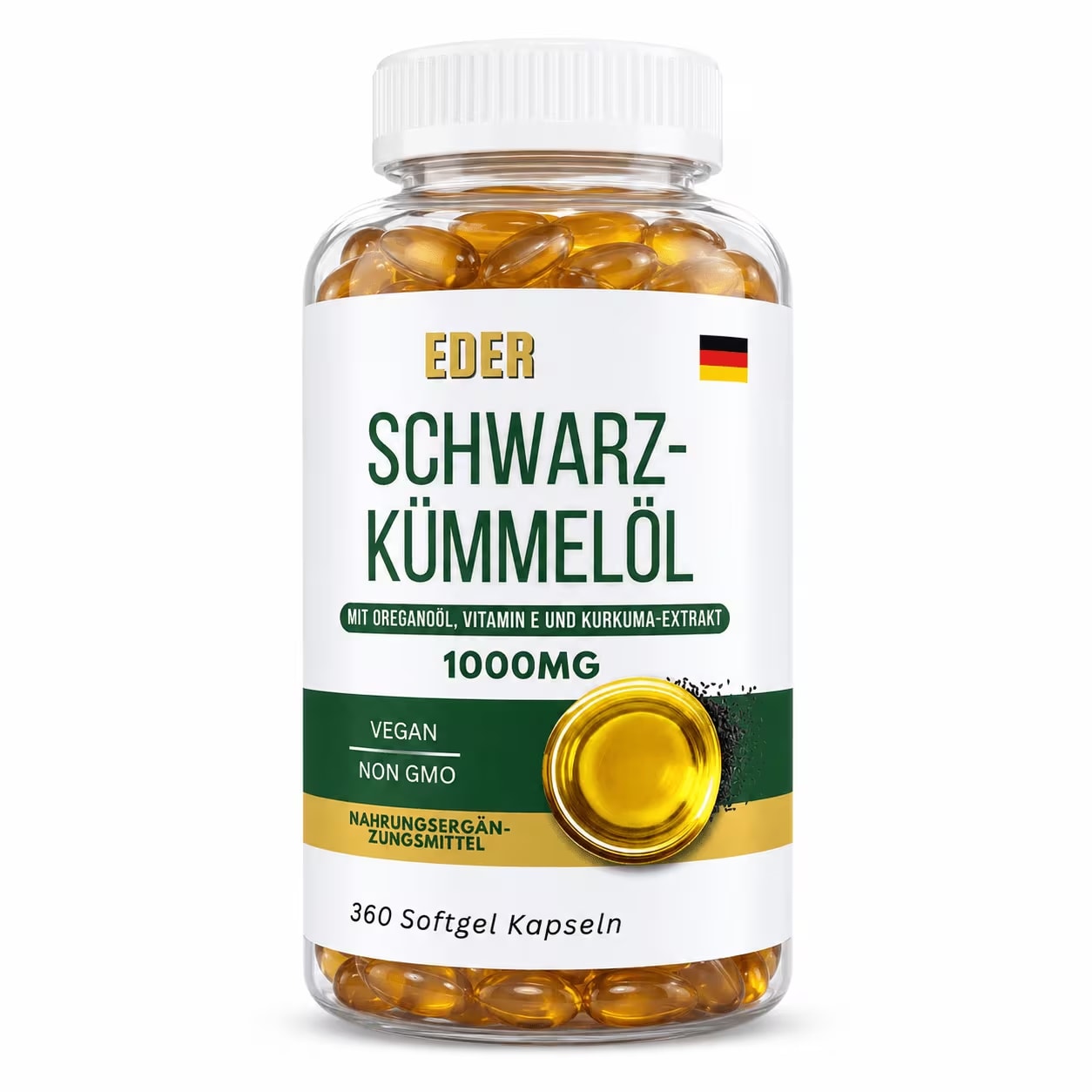
Schwarzkümmelöl 1000mg Kapseln – 360 vegane Weichkapseln, 180-Tage-Vorrat – Schwarzkümmelöl mit Oreganoöl, Kurkuma-Extrakt, Vitamin E & Piperin – Reines Bio-Extrakt

Apfelessig Gummibärchen 1200mg – 120 vegane Fruchtgummis | 60 Portionen | 2-Monats-Vorrat | Mit Vitamin C, B6, B12, Folsäure & Roter Bete | Natürlicher Apfelgeschmack | Für Damen & Herren